
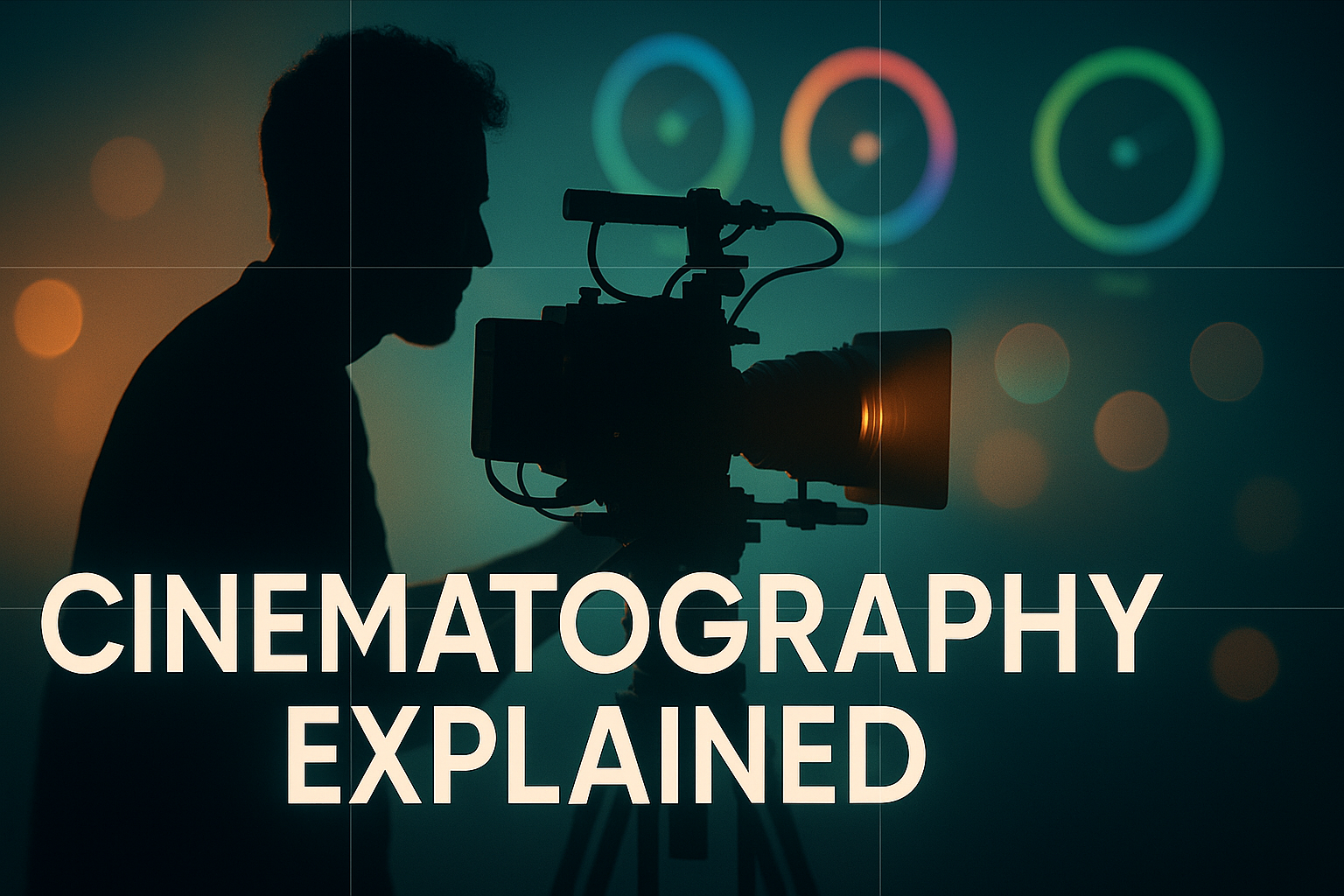
Cinematography Explained: The Art of Visual Storytelling
Cinematography is the heart of filmmaking. It is the visual language through which stories, emotions, and ideas are communicated to the audience. While a script tells you what happens, cinematography shows you how it happens. Every shot, camera movement, lighting choice, and composition plays a role in shaping the movie’s mood, tone, and overall impact. Whether you’re a beginner, a filmmaker, or just curious about how movies achieve their breathtaking visuals, this blog breaks down cinematography in simple terms.
1. What Is Cinematography?
Cinematography is the art and technique of capturing moving images on camera. It combines creativity and technical skill, involving decisions about lighting, framing, angles, movement, lenses, and camera settings. The person responsible for all these choices is the **cinematographer** or **Director of Photography (DP)**.
The DP works closely with the director to translate the script into visual storytelling. They choose how every scene looks and feels—whether it’s bright and colorful, dark and moody, or warm and nostalgic.
2. The Role of the Cinematographer
A cinematographer does much more than operate a camera. Their responsibilities include:
- Choosing cameras and lenses based on the film’s style.
- Designing lighting setups that enhance the mood.
- Planning shot compositions that support the story.
- Collaborating with directors, gaffers, and camera crews.
- Maintaining visual continuity across scenes.
Their decisions can dramatically change the way the audience experiences the story.
3. Key Elements of Cinematography
• Camera Shots
Shots define how much of the subject or environment the audience sees. Common shots include:
- Wide Shot (WS): Shows the environment and setting.
- Medium Shot (MS): Captures the character from waist up.
- Close-Up (CU): Focuses on facial expressions and emotions.
- Extreme Close-Up: Shows small details like eyes or hands.
• Camera Angles
Camera angles affect how the audience perceives a character:
- High Angle: Makes the subject appear small or vulnerable.
- Low Angle: Makes the subject look powerful and dominant.
- Eye-Level Shot: Creates a natural, neutral perspective.
• Camera Movement
Movement adds emotion and dynamism to scenes:
- Pan: Horizontal movement of the camera.
- Tilt: Vertical movement of the camera.
- Dolly: Camera tracks toward or away from the subject.
- Handheld: Creates a shaky, realistic, documentary-style effect.
- Steadicam: Smooth movement ideal for long takes.
• Lighting
Lighting is a powerful tool in cinematography. It shapes the mood, highlights characters, and sets the tone. Key lighting styles include:
- High-Key Lighting: Bright, low-contrast lighting often used in comedies or upbeat scenes.
- Low-Key Lighting: Dark, shadowy lighting used for thrillers or dramatic scenes.
- Three-Point Lighting: Uses key light, fill light, and backlight to create balanced visuals.
- Natural Lighting: Relies on sunlight for realistic scenes.
• Composition
Composition refers to how elements are arranged in the frame. Popular techniques include:
- Rule of Thirds: Dividing the frame into a grid to place subjects aesthetically.
- Leading Lines: Lines in the scene that draw attention to the subject.
- Symmetry: Balanced visual layouts often used in artistic shots.
- Depth: Using foreground, middle ground, and background to create layered visuals.
4. Color and Mood
Color grading and color palettes help set the emotional tone of a film. Warm colors (reds, oranges, yellows) create feelings of comfort or passion, while cool colors (blues, greens) evoke calmness or sadness. Cinematographers use color to:
- Create emotional impact
- Differentiate time periods
- Show character development
- Enhance world-building
5. Lenses and Depth of Field
Lenses dramatically affect the look of a shot. Wide-angle lenses capture more of the environment, while telephoto lenses bring far objects closer and create a compressed look. Depth of field—how much of the frame is in focus—is another key factor:
- Shallow Depth of Field: Blurred background, focusing attention on the subject.
- Deep Depth of Field: Everything in the frame is sharp and clear.
6. Cinematography in Different Genres
Different genres use distinct visual styles:
- Horror: Dark lighting, tight frames, sudden movements.
- Romance: Soft focus, warm tones, smooth camera movement.
- Action: Fast cuts, handheld shots, wide angles.
- Sci-Fi: Stylized lighting, futuristic color palettes, VFX integration.
7. Why Cinematography Matters
Cinematography shapes how the audience feels throughout the film. It can make a simple moment emotional, intense, or magical. Even without dialogue, powerful visuals can tell a complete story. Great cinematographers do not just capture images—they create emotion, depth, and meaning.
Conclusion
Cinematography is truly the art of visual storytelling. Every choice—from lens selection to lighting style—creates a unique world for the audience to experience. It blends creativity, technique, and intuition, making it one of the most essential elements of filmmaking. Whether you’re a content creator, aspiring filmmaker, or movie lover, understanding cinematography enhances your appreciation of cinema and inspires deeper creativity.