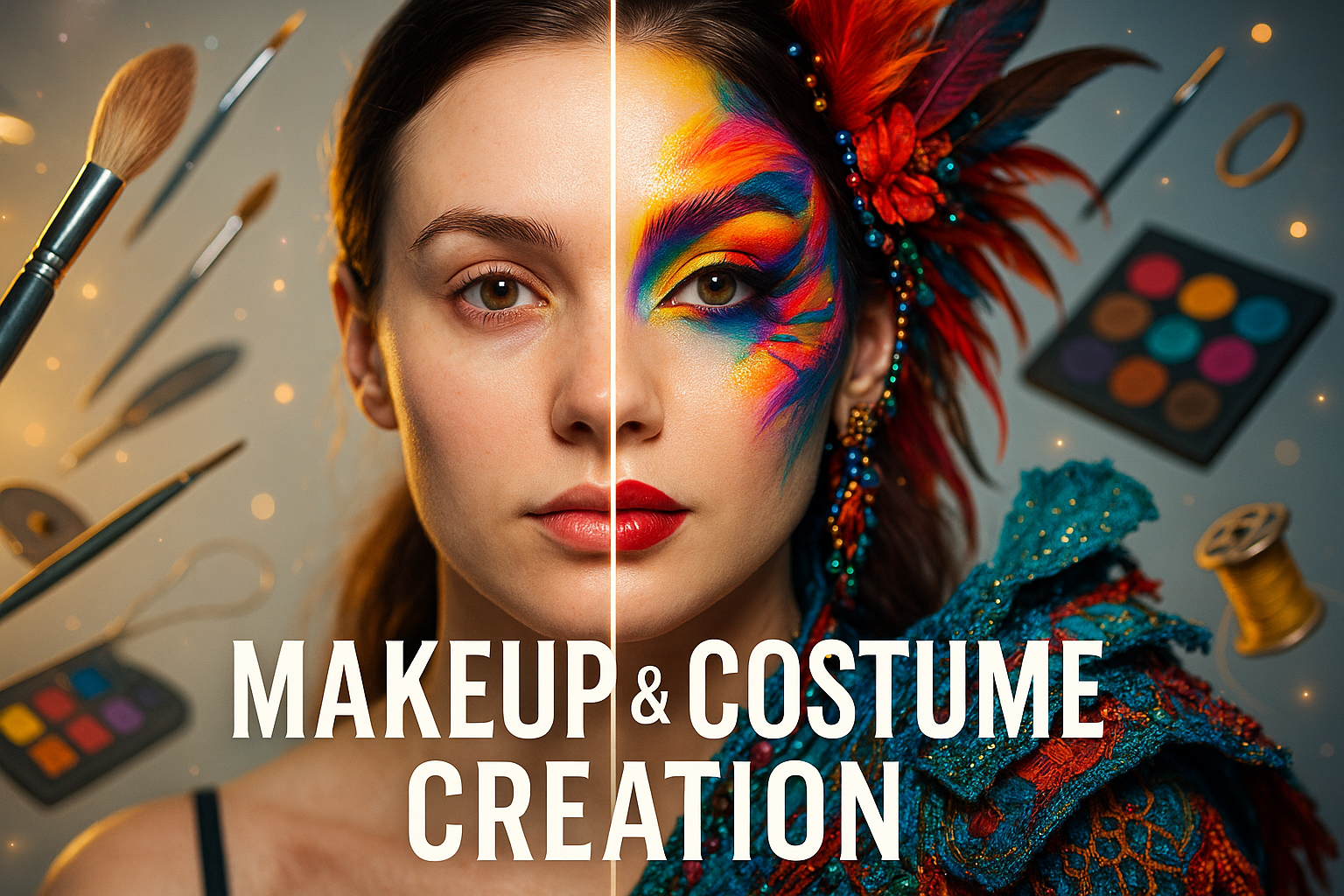
Makeup & Costume Creation – The Art Behind Character Transformation
Makeup and costume design are two of the most important departments in filmmaking. They help define a character’s personality, background, age, culture, mood, and emotional journey. Long before the camera rolls, makeup artists, hairstylists, and costume designers begin shaping the identity of every character the audience will see on screen. From superhero suits and fantasy creatures to realistic aging, bruises, wigs, and historical outfits, the work of these artists helps make stories believable and visually engaging.
1. Why Makeup & Costumes Matter
A character’s look is often the first thing viewers notice. Makeup and costumes work together to:
- Establish identity and personality
- Show cultural background or time period
- Highlight social status or profession
- Reflect emotional and physical changes
- Support dramatic and visual storytelling
Without well-designed makeup and costumes, characters can feel incomplete or disconnected from the story’s world.
2. The Makeup Department
Makeup artists are responsible for shaping the character’s face and body for the camera. Their work ranges from simple beauty makeup to complex prosthetics and fantasy transformations.
• Beauty Makeup
Used in dramas, romance, and everyday scenes, beauty makeup enhances facial features while keeping the character natural. It includes foundation matching, contouring, highlighting, and subtle corrections.
• Character Makeup
This style reflects personality traits. For example, a villain may have darker tones, sharper eyebrows, or tired eyes. A cheerful character may have brighter tones and softer features.
• Aging Makeup
Artists use latex, paints, and shading to create wrinkles, age spots, gray hair, and sagging skin. This process allows one actor to play multiple life stages.
• Injury & SFX Makeup
Special FX makeup includes cuts, bruises, burns, scars, blood, and other realistic injuries. It requires detailed painting, sculpting, and blending to look authentic on HD cameras.
• Creature & Prosthetic Makeup
Fantasy and sci-fi films often use prosthetics—custom pieces glued to the actor’s face or body. These can create aliens, monsters, mythical beings, or exaggerated features.
• Wig Styling & Hair Design
Hair is a huge part of character identity. Stylists create period-specific looks (like 80s curls), fantasy styles, or everyday grooming. Wigs help actors maintain consistency throughout long shoots.
3. The Costume Department
Costume designers create clothing that enhances the character’s story. Their job begins with researching fabrics, colors, and clothing styles that match the script’s world.
• Character Study & Research
Designers analyze each character’s backstory, lifestyle, emotions, and profession. They study the script to understand how costumes will evolve throughout the film.
• Costume Sketching & Design
Designers sketch outfits with color palettes, textures, and accessories. These sketches help visualize the overall style before production.
• Fabric Selection & Tailoring
Choosing the right fabric is essential—superhero suits need stretchable materials, historical outfits require authentic fabrics, and fantasy costumes use custom-made textiles.
• Fittings & Adjustments
Costumes are fitted to actors to ensure comfort and mobility, especially for action scenes. Small adjustments help avoid wrinkles, tightness, or wardrobe malfunction.
• Continuity in Costumes
Movies are filmed out of order, so designers must track:
- Stains
- Rips
- Sweat marks
- Accessories
- Damage from previous scenes
This ensures the costume matches the story timeline.
4. How Makeup & Costumes Work Together
Makeup and costume teams collaborate closely because their work overlaps. For example:
- A warrior costume might require dirt makeup and bruises.
- A royal dress needs matching hairstyles and jewelry.
- A futuristic outfit might require metallic body paint.
- A creature costume requires prosthetic makeup and body suits.
When both departments align, the character feels authentic and visually powerful.
5. Tools & Techniques Used in Makeup
Professional kits include:
- Airbrush machines
- Latex and silicone
- Alcohol paints
- Prosthetic adhesives
- Special FX blood and gels
- Contouring palettes
6. Tools & Techniques Used in Costumes
Costume designers use:
- Sewing machines
- Fabric dyeing and printing tools
- Armor crafting tools
- 3D printing for props
- Embroidery and beadwork materials
7. Makeup & Costume Creation in Different Genres
• Historical Films
Accurate period makeup, wigs, and handcrafted costumes bring history to life.
• Fantasy Films
Elves, monsters, beasts, magical characters—everything requires heavy prosthetics and elaborate costumes.
• Sci-Fi Movies
Futuristic styles, robotic makeup, metallic accents, and tech-based costume materials are common.
• Horror Movies
Blood, wounds, monsters, pale skin, and dark costumes create a terrifying atmosphere.
• Superhero Films
Iconic suits, helmets, armor plates, and muscular body suits define the heroic look.
Conclusion
Makeup and costume creation are true forms of cinematic art. They transform actors into believable characters, enrich storytelling, and help build entire worlds—from ancient kingdoms to futuristic galaxies. These departments require creativity, research, technical skill, and teamwork. Whether it’s a simple beauty look or an elaborate fantasy transformation, makeup and costume artists turn imagination into visual reality. Their contribution is essential to every film, making characters unforgettable and bringing stories to life on screen.