
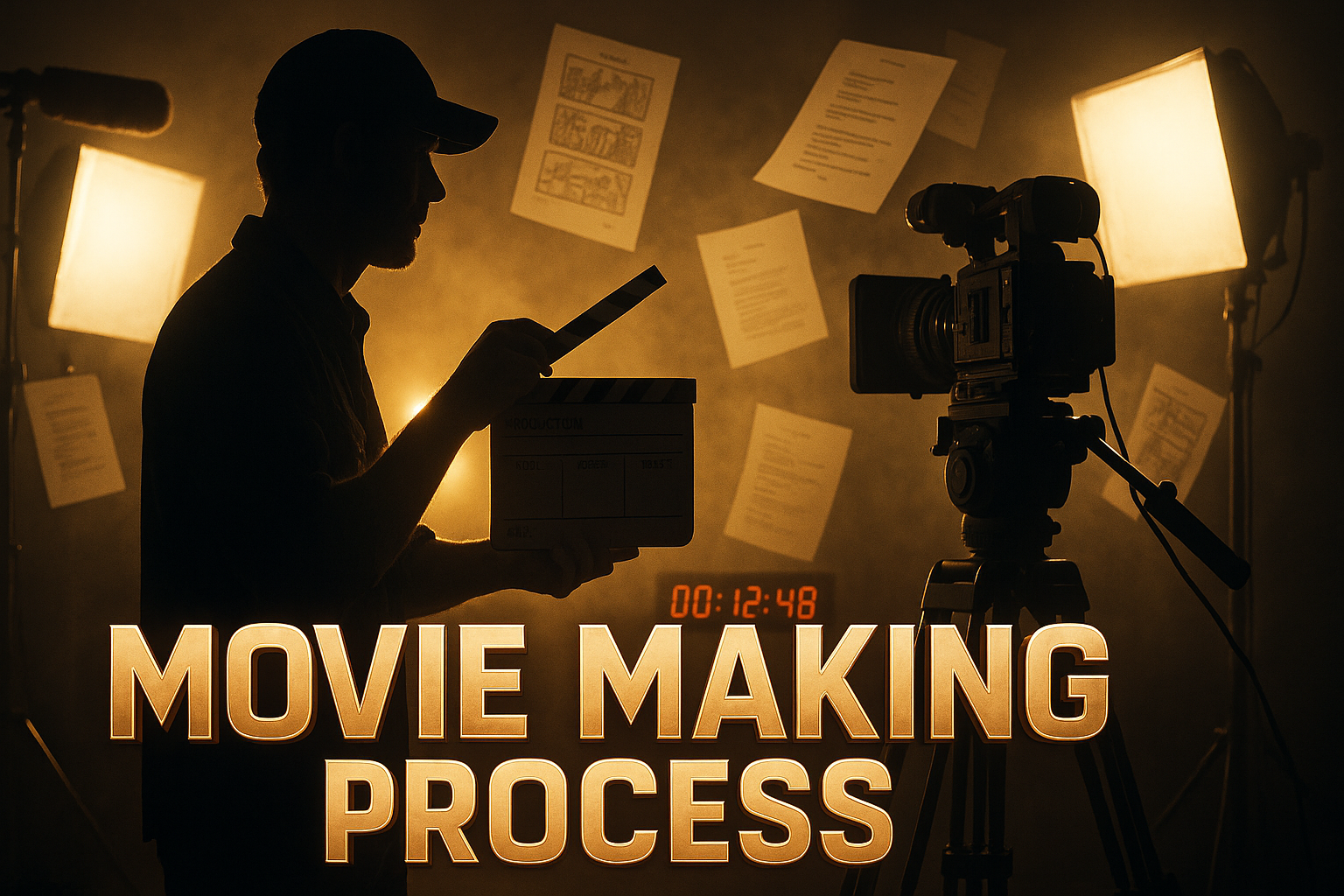
The Complete Movie Making Process Explained: From Idea to Big Screen
Have you ever wondered how a movie goes from a simple idea in someone’s mind to a full-fledged film playing in cinemas worldwide? The process of movie making is long, complex, and incredibly creative. It involves hundreds of people, multiple stages, thoughtful planning, and months—or even years—of work. In this blog, we break down the entire movie-making process in a simple, beginner-friendly way.
1. Development: Where Ideas Begin
Every movie starts with an idea. This idea may come from a writer, a director, a studio executive, or even a book or real-life incident. During the development phase:
- Concept creation: A basic story idea or theme is formed.
- Writing the script: A screenwriter creates a screenplay, which includes the story, dialogues, and scene structure.
- Script revisions: The script goes through multiple drafts to improve pacing, dialogue, and character arcs.
- Pitching: The writer or producer presents the script to studios or investors to secure funding.
Development often takes the longest time, as a strong script is the foundation of every successful film.
2. Pre-Production: Planning Every Detail
Once the script is approved and financed, the project moves into pre-production. This is the phase where the entire movie is planned out on paper before cameras start rolling. Key tasks include:
- Casting actors: Choosing the perfect actors for each role.
- Hiring crew: Cinematographers, editors, costume designers, production designers, music directors, and many others join the project.
- Location scouting: Finding suitable locations for each scene.
- Storyboarding: Visual sketches that outline how each scene will look.
- Set and costume design: Preparing the visual world of the film.
- Scheduling: Creating shooting schedules to manage time and resources.
Pre-production ensures that the director has a clear roadmap and the production stays within time and budget.
3. Production: Lights, Camera, Action!
This is the most exciting part of movie making—actual filming. During the production phase:
- Scenes are filmed: Actors perform while cameras, lights, and sound teams capture the footage.
- Director leads the set: The director guides actors, supervises shots, and ensures the movie’s vision remains consistent.
- Daily reviews (dailies): The team reviews footage shot each day to ensure quality.
- Multiple takes: Scenes are often shot many times to capture the perfect performance.
Production can last weeks or months, depending on the size of the film. It is fast-paced, high-pressure, and requires teamwork on every level.
4. Post-Production: Crafting the Final Movie
After filming is complete, the movie enters post-production. This stage transforms raw footage into a polished final product. Key post-production elements include:
- Editing: Editors cut, arrange, and stitch together scenes to form a coherent story.
- Sound design: Adding sound effects, dialogue clarity, ambience, and background audio.
- Music scoring: Composers create the film’s soundtrack, background score, and theme music.
- Visual effects (VFX): Adding CGI, animations, and digital enhancements.
- Color grading: Adjusting color tones and brightness to set the movie’s mood and style.
Post-production may take longer than filming itself, especially for VFX-heavy movies like sci-fi or superhero films.
5. Distribution: Reaching the Audience
Once the final movie is ready, it needs to reach viewers. This is where distribution comes in. Studios partner with distributors to:
- Release the movie in theaters
- Upload it on OTT platforms
- Distribute DVDs or digital copies
- Manage international releases
A good distribution strategy ensures the movie reaches the right audience, earning revenue and popularity.
6. Marketing: Creating Buzz
No matter how good a movie is, without proper marketing, it may not reach its full potential. Marketing includes:
- Trailers and teasers
- Posters and advertisements
- Interviews, press events, and social media promotions
- Behind-the-scenes content
- Collaborations with brands and influencers
A strong marketing campaign can turn a simple movie into a global blockbuster.
Conclusion
The movie-making process is truly a blend of art, creativity, technology, and massive teamwork. From a spark of an idea to the final frame on screen, each stage contributes to the magic we enjoy in cinemas and on streaming platforms. Understanding this process not only increases appreciation for films but also inspires future storytellers, filmmakers, and creators.